Investigation of defect characteristics and their correlation with device performance in wide bandgap semiconductors
Joining forces to bridge the gap between microscopic flaws and macroscopic power!
International, Partnerships, Research
This Trilateral research initiative bridges National Taiwan University, Université Grenoble Alpes and University of Tsukuba to revolutionize our understanding of how material defects dictate electrical performance. Their mission: clarifying the relationship between material defects and electrical performance, providing practical guidelines to optimize material quality and enhance device reliability
Investigation of Defect Characteristics and Their Correlation with Device Performance in Wide Bandgap Semiconductors is a strategic research collaboration between Graduate Institute of Photonics and Optoelectronics, CNRS, and Institute of Pure and Applied Sciences. Launched in 2025 as a laureate of the NTU-UGA-UT Trilateral Centre, this project addresses the device reliability and performance driven by defects and boundary issues.
By pooling their expertise in Positron Annihilation Spectroscopy (PAS), Cathodoluminescence (CL) spectroscopy, and Electron beam induced current (EBIC) imaging, they are investigating defect-related phenomena in wide bandgap semiconductor materials under device processing and long-term operational conditions.
Together, they are not just conducting research; they are building the scalable frameworks needed for a more Sustainable future in the Semiconductor and Microelectronics Industry.
Tangible Results
Thanks to this program, we reached a major milestone by establishing a systematic, integrated framework for advanced defect characterization in wide-bandgap and compound semiconductors. Previously relying on isolated material measurements, we transitioned to a multi-dimensional approach that correlates atomic-level crystal flaws with macroscopic device performance. By gathering extensive datasets across two critical material systems, GaN-based High Electron Mobility Transistors (HEMTs) and AlGaInP red micro-LEDs, we successfully mapped how epitaxial growth parameters, chemical doping, and post-fabrication treatments dictate defect morphology. Crucially, this effort enabled a highly fruitful international collaboration with the Néel Institute (CNRS, France), providing access to world-class optical analysis tools and generating robust preliminary findings that advance our understanding of device reliability.
For our GaN HEMT research, the program enabled significant progress in combining Positron Annihilation Spectroscopy (PAS) and Cathodoluminescence (CL) spectroscopy. We successfully completed PAS investigations on GaN samples subjected to various elemental doping and etching processes, identifying vacancy-type defects and uncovering how chemical incorporation and surface modifications drive defect formation. Building on this, we developed CL spectroscopy as a complementary technique. By capturing both plan-view and cross-sectional distributions, we can now effectively differentiate dislocation-related extended defects, which manifest as non-uniform dark regions, from localized point defects tracked via shifts in yellow, blue, and band-edge emissions. This integrated PAS and CL methodology provides direct evidence of epitaxy-dependent material quality and links defect origins to ultimate electrical behavior.
Expanding our optical characterization framework, the program made possible a collaboration with Prof. Gwénolé Jacopin at the Néel Institute to investigate efficiency droop in AlGaInP micro-LEDs. Utilizing his Spatially Resolved Time-Correlated Cathodoluminescence (SRTC-CL) setups, we collected unprecedented nanoscale datasets. We successfully visualized sidewall "dead zones" and extracted the absolute surface recombination velocity (S). Our data proves that removing dry-etch damage via an optimized HCl wet-etch, followed by sulfur and ALD Al2O3 passivation, dramatically reduces S. Furthermore, by statistically mapping pixel arrays, we decoupled internal quantum efficiency from light extraction losses. Finally, we gathered valuable structural data on how varying the thickness of the ALD Al2O3 layer alters nanoscale field-effect passivation, rounding out a highly successful experimental campaign.
Testimonials from principal investigators
|
The most significant benefit of this program has been the ability to transition our research from isolated material measurements into a comprehensive, multi-dimensional framework for defect characterization. This support acted as a direct catalyst for our work by bridging our in-house device processing with world-class optical analysis. For our GaN HEMT research, it provided the resources to integrate PAS with CL, allowing us to systematically link atomic-scale vacancies to macroscopic electrical performance. Furthermore, the program made our international collaboration with Prof. Gwénolé Jacopin at the Néel Institute possible, which was a true gamechanger for our AlGaInP micro-LED research. Accessing his unique SRTC-CL and HBT setups allowed us to visualize nanoscale sidewall "dead zones" and extract surface recombination velocities that were previously invisible to our standard laboratory equipment. Ultimately, this program accelerated our progress tremendously, transforming our empirical device fabrication efforts into deep, physically grounded defect engineering.
Chao-Hsin WU
National Taiwan University
View researcher’s profile
|
|
Based on this program, three highly motivated NTU students visited UT. They studied the characterization techniques at UT before their visit, and I was deeply impressed by their effort and knowledge about it. During their visit, the students interact not only with UT professors but also with graduate and undergraduate students. The NTU students came to UT with samples for the evaluation. But the sizes of some samples were not appropriate for the characterization. Then, UT and NTU students worked together and quickly solved the problem. I believe this kind of collaborative work was very important for both students and gave them a remarkable experience. I sincerely appreciate Prof. Wu's advice and motivation to his students.
Akira UEDONO
University of Tsukuba
View researcher’s profile
|
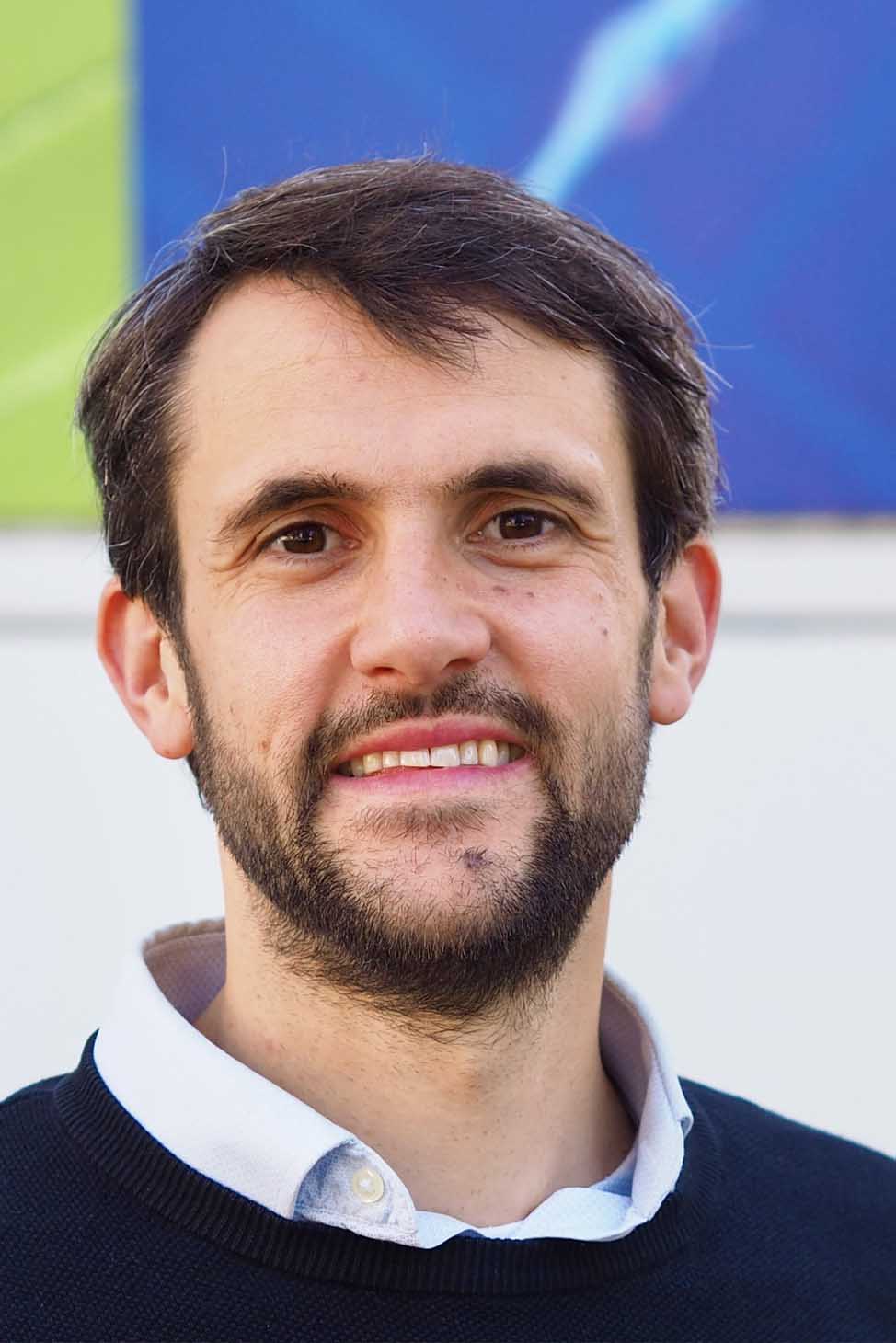 |
To me, the success of this trilateral program has been its ability to build on the complementary strengths of three laboratories, each bringing a unique piece of the puzzle. While NTU provides the foundation through their excellence in electronic device development and fabrication, our collaboration allows us to identify the physical mechanisms limiting device efficiency. By integrating the University of Tsukuba’s (UT) specialized expertise in quantifying point defects via positron annihilation spectroscopy with our own work at UGA/CNRS in cathodoluminescence and time-resolved cathodoluminescence, we can precisely evaluate how structural defects and surface recombinations dictate macroscopic performance. To build this collaboration, a key element was the workshop in Taipei, which was essential for defining these technical synergies. Following the success of our initial measurements, we will nowhost students from both UT and NTU in Grenoble for upcoming measurement campaigns in 2026, further strengthening the scientific bonds of this partnership.
Gwénolé JACOPIN
Université Grenoble Alpes - CNRS
View researcher’s profile
|
Updated on April 29, 2026